
Unveiling the Hidden Dark Reality of the Indian Judiciary
- Sakshi Mishra
- Nov 28, 2025
- 5 min read


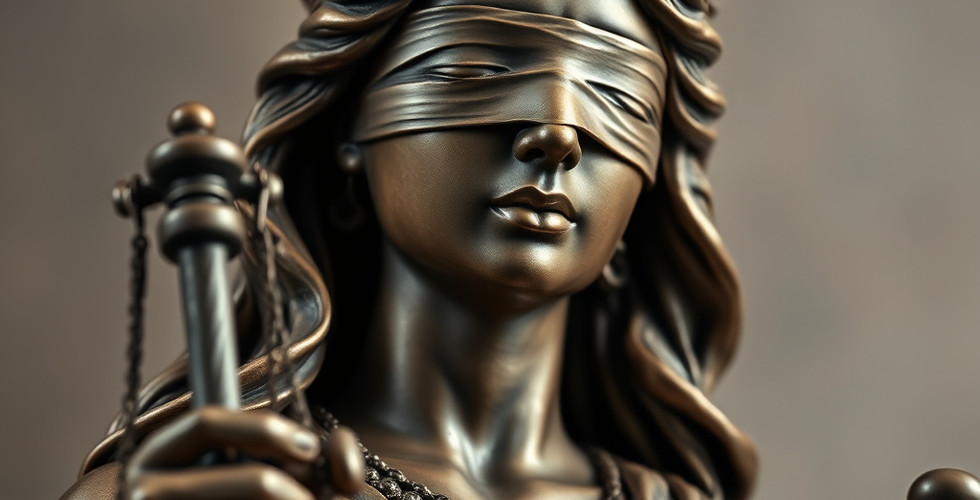
India hosts one of the world's largest and most influential judicial systems. Ideally, it functions as the defender of justice, the protector of rights, and the ultimate refuge for citizens facing injustice.
However, beneath the grand court buildings and the solemn sound of a judge's gavel, there exists a reality that is often unsettling, overlooked, and deeply human: the hidden challenges within the Indian judiciary. Justice in India is depicted as a symbol of unwavering fairness, blind, impartial, and noble. Yet, behind this noble façade, justice often struggles; it bears a heavy workload and sometimes remains silent as suffering grows. The phrase “Justice delayed is justice denied” is not just a saying; here, it is a heart-breaking reality that affects millions, turning their hopes for justice into endless ordeals and sleepless nights.
Beyond the imposing courtrooms and the echo of legal jargon, lies a rarely glimpsed world, filled with unseen anguish and unheard cries for help. For many, the true face of India’s judiciary is not the statue of Lady Justice, but the daily struggle against an overwhelming system. The Indian judiciary stands as a proud sentinel of democracy, the ultimate shield for those seeking justice and protection. Yet, beyond the grandeur of its courtrooms and the might of its judgments, a quiet storm rages: a crippling shortage of judges and an unbearable burden placed on the few who remain. This issue is not merely a bureaucratic hiccup; it is a deep, festering wound affecting every citizen whose hope for justice hangs in the balance. India faces one of the world’s most staggering judge-to-population ratios. While courtrooms are inundated with millions of new cases each year, the number of judges has barely increased. Many judicial seats remain vacant not for weeks, but sometimes for years, caught in the crossfire of sluggish appointments, political maneuvering, and endless layers of red tape. The result is a justice system struggling to cope while citizens wait for answers that come far too late. The fallout is catastrophic: judges in India are overwhelmed with mountains of cases, each more urgent than the last. What should be a measured and thoughtful pursuit of justice is transformed into a frantic race against time, where careful deliberation gives way to desperate speed, and the fate of countless lives hangs in the balance.
Throughout history, numerous cases have demonstrated that wealth can often tip the scales of justice. From high-profile celebrities walking free despite serious allegations to powerful corporations silencing victims through expensive legal teams, money has repeatedly influenced the course of the law. Consider the infamous case of O.J. Simpson, whose team of lawyers crafted a winning defence believed to be affordable only by the wealthy. In India, business tycoons and politicians have been known to evade punishment while ordinary citizens face the full weight of the law. The 2014 hit-and-run case involving Salman Khan, where the lengthy legal process and ultimate acquittal drew public ire, is one such example that ignited debates across the nation.
Instances of bribery, witness tampering, and exploitation of legal loopholes by the wealthy to escape accountability are well-documented. Meanwhile, underprivileged victims often remain voiceless, struggling to find justice. This recurring pattern fuels public frustration, reminding us that the true challenge lies not just in exposing the truth, but in ensuring that justice cannot be bought or swayed by fortune.
From Hollywood to Bollywood, Wall Street to Dalal Street, the narrative remains consistent: when justice has a price tag, only a few can afford it. These cases become not just legal battles, but focal points of societal outrage and calls for reform. The murder of Jessica Lal in 1999 is not merely a headline from the past; it is a story that continues to resonate with the nation. Not because the crime was complex, but because justice itself seemed to fade, leaving the country questioning what truly holds sway in a courtroom: truth or influence?
Jessica, a vibrant model, was shot in cold blood at a crowded party. The perpetrator was not a shadowy figure; dozens witnessed the event. Yet, instead of swift justice, a dramatic saga unfolded where money and power appeared to obscure the simplest truths. As witnesses turned hostile and the accused walked free, the case exposed the unsettling reality of India’s legal system.
Could truth ever hope to stand tall when power leans in and begins to whisper? With every twist, Jessica’s case exposed how fragile justice can be and sparked a nationwide movement that asked: Can we let power write the final verdict?
The Vyapam Scam is not just a chapter in India’s history of corruption; it’s a chilling thriller, where every courtroom bench seemed haunted by more than just paper trails. In this saga, justice wasn’t only outnumbered, it was outmaneuvered by something far darker. The evidence file may have been thick, but the air was thicker with fear.
At first glance, it was a mammoth exam scam one that traded dreams and futures for cash in the backrooms of Madhya Pradesh. Medical seats, government jobs, a flash of hope for thousands all bought and sold through a brazen market of forged marksheets, ghost candidates, and collusion so complete, even the law seemed unsure where to begin. The CBI would later call it a “well-oiled machinery of corruption.”
But the Vyapam case isn’t infamous just for its scale. What truly turns the blood cold is the streak of death trailing behind the investigation. It reads like a crime novel except every name and number is heartbreakingly real. Over forty deaths, each stranger than the last.
When Justice Walks in Shadows. Across these harrowing cases, Jessica Lal, the BMW Hit-and-Run, Aarushi–Hemraj, Vyapam, a single, haunting truth echoes: Indian justice isn’t always defeated by the crime itself, but by the invisible hands weaving through its corridors. In every courtroom, justice is supposed to be simple: find the evidence, hear the testimony, and let the law decide. But reality seldom follows the script.
Each case seemed to unravel not with a bang, but with a hush. Witnesses faded into silence. Evidence changed shape and vanished altogether. Power and privilege pressed from the shadows, bending the arc of each narrative. What was needed were facts; what the courts often received were riddles, half-told stories, missing pieces, mirrors reflecting only doubt.
Legally, a case should be a straight path toward the truth. Yet in the dim light of these trials, what emerged was a labyrinth, with no clear end, no certain justice, and always another turn.
For every verdict delivered, new questions crept in; for every loose thread tied, another unravelled. And so, the system itself seems trapped in a never-ending loop: chase the crime, battle the shadows, and begin again. Justice waits in the centre, sometimes glimpsed, but seldom grasped forever just out of reach, calling out to those who dare to seek it.
The greatest mystery isn’t always ‘who did it’, but whether justice can ever truly emerge from the endless maze that surrounds it.
“In my opinion, though it may differ for others, the justice system is a never-ending dark hole, an abyss where cries for truth echo endlessly, but no sound ever returns.”


I love it